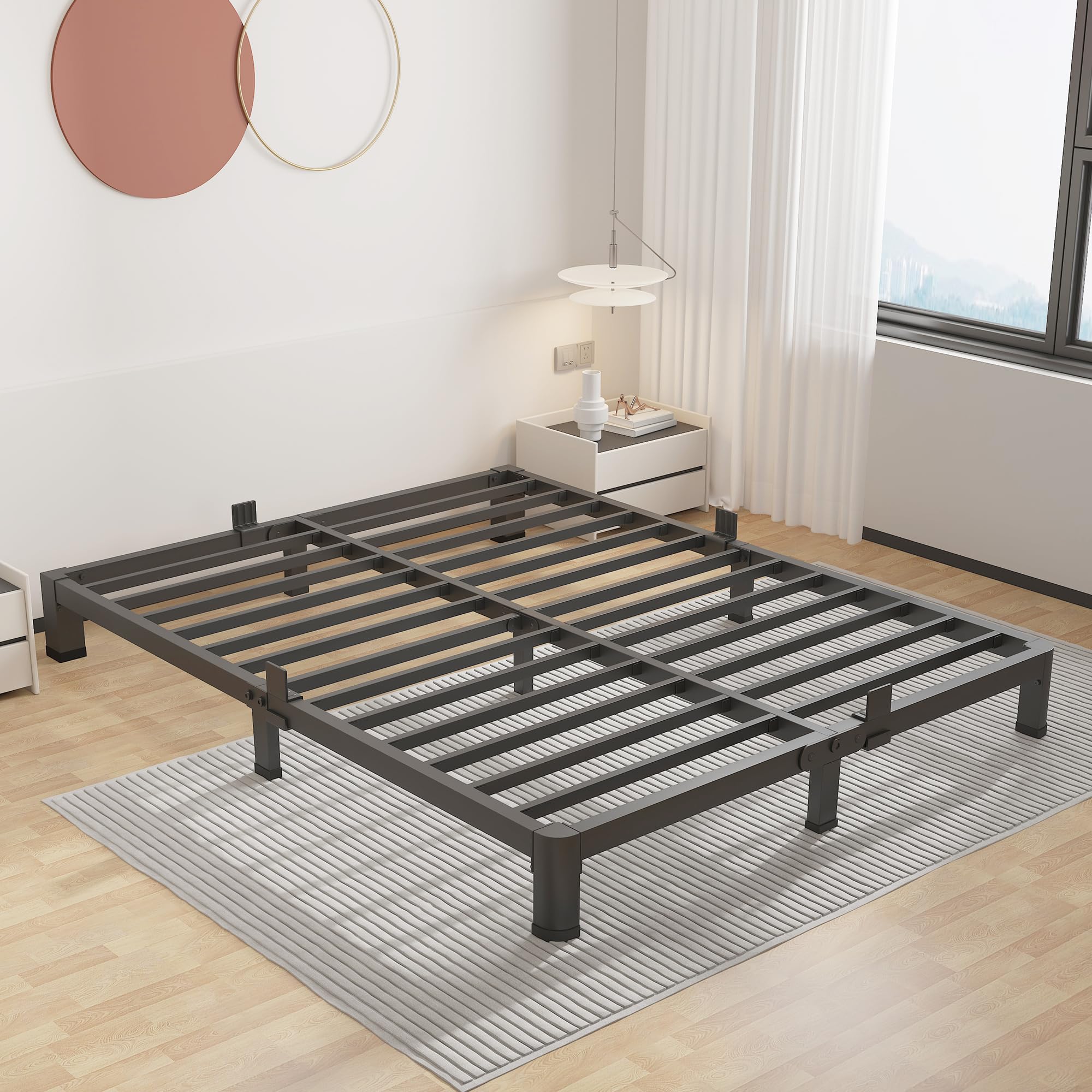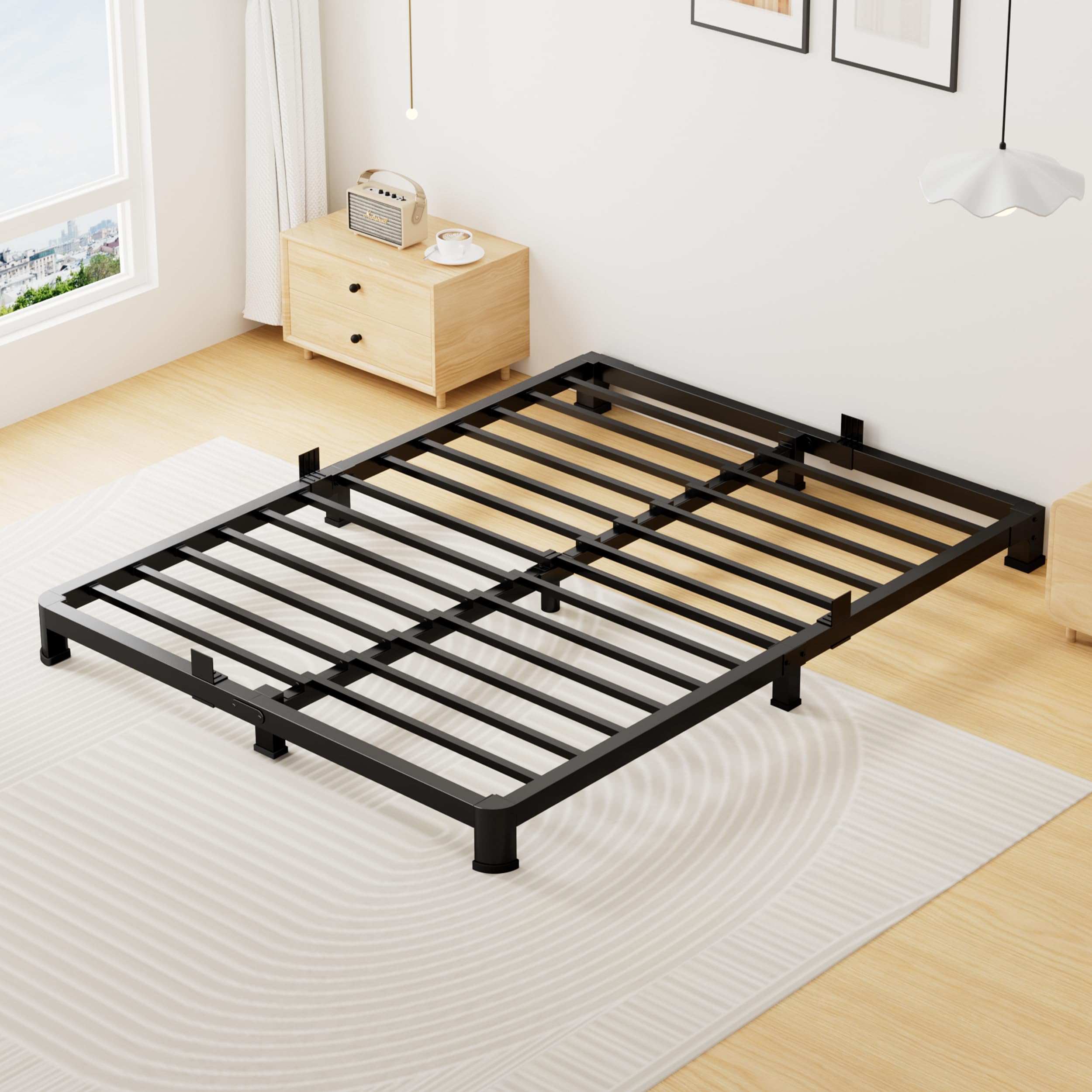
Bedroom

Best Low Profile Bed Frames of 2026

A low-profile bed frame does one thing well: it gets the bulk out of a bedroom. No box spring, no tall headboard, no dark gap underneath swallowing socks — just a mattress sitting closer to the floor, which makes a small room feel taller and a large one feel calmer. The catch is that lowering a bed also lowers your margin for error, and a frame that wobbles at nine inches off the floor is much harder to ignore than one hidden under a bed skirt.

My team has assembled 11 of them in real bedrooms over the past nine months, from bolt-together metal to solid wood, and one thing became clear fast: these frames are decided at the kitchen table, with the hardware sorted into piles, long before anyone sleeps on them. Instructions, honest dimensions, and hardware that survives being taken apart twice matter more here than in almost any other furniture category. The picks below are the ones that stayed tight, looked good months in, and were worth the money.

#1

Best Overall

Superay 4-Inch Queen Frame

Superay 4-Inch Queen Frame

9.0/10 Outstanding
  • Size: Queen
  • Deck Height: 4 inches
  • Support Legs: 9
  • Weight Capacity: 3,500 pounds
Check Price on Amazon

Pros

  • True 4-inch deck, no box spring needed
  • Nine legs under a 3,500-pound rating
  • Quiet in use and easy to build alone

Cons

  • Under-bed clearance is only about 4 inches

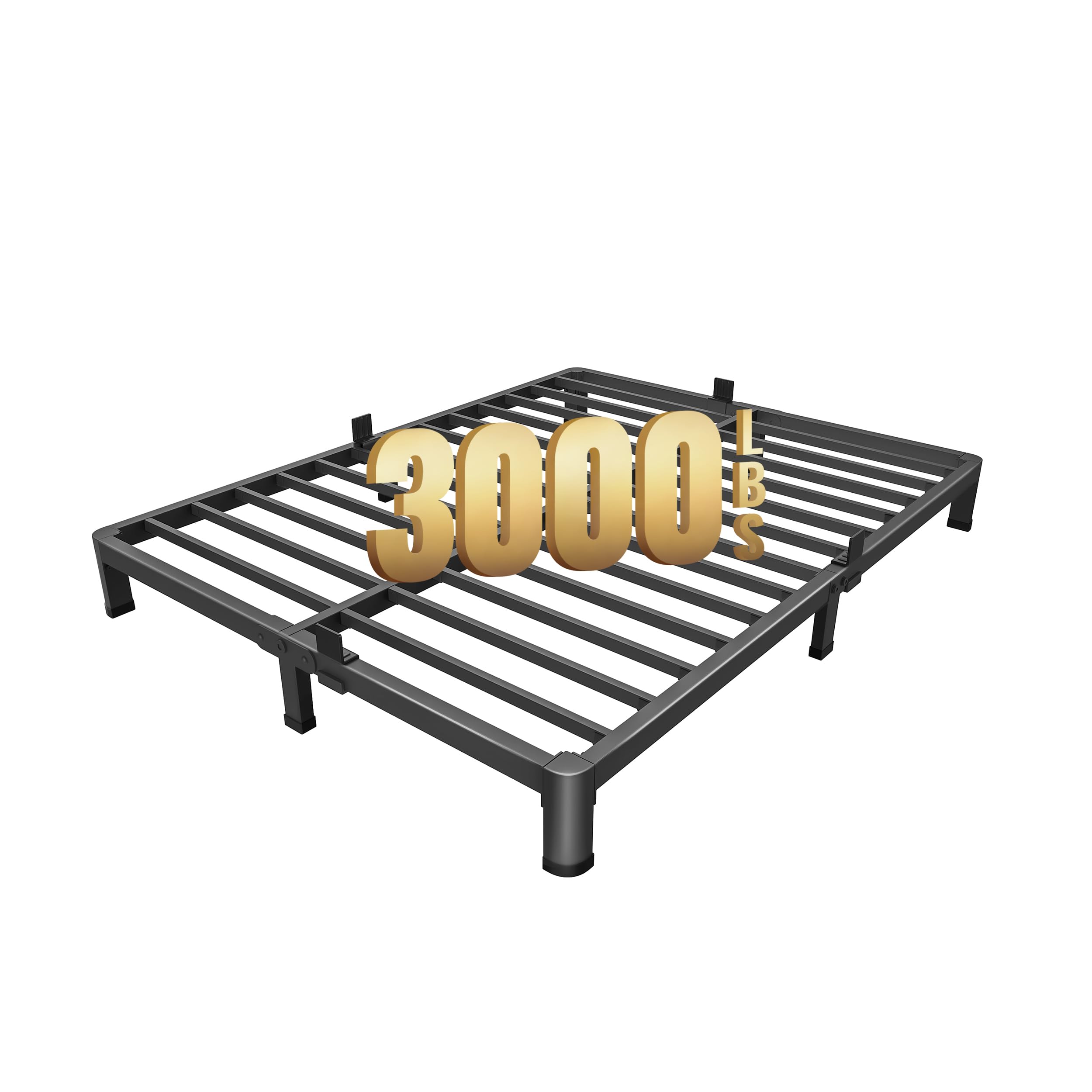
Four inches off the floor is low enough that the frame all but disappears under the mattress, and that's the whole argument for this one. The deck sits at 4 inches on nine legs, where most low frames make do with six, and it's rated to 3,500 pounds, a number we read as margin rather than a target. What we noticed first is how little it moves: no creak when you turn over, no shuffle across a wood floor when you sit down on the edge.

Assembly was the surprise. The parts come lettered, the slats arrive hinged into folding sections so you're not sorting a dozen loose bars, and the wrenches are in the box. One person can put it together in about an hour, and the whole thing weighs around 32 pounds, so the stairs are the hard part rather than the build. The instructions are diagram-led, with each piece lettered to match, which is why a solo build goes as smoothly as it does.

The details that matter at this height are small ones. The foot-end legs are rounded, which you appreciate the first time you walk past a low bed in the dark, and thin foam pads sit between the slats and the steel so nothing knocks. The four mattress gaskets that clip to the rails are the part to watch: they do their job while the mattress sits inside them, and they're the first thing to check if it starts creeping toward the headboard.
Bottom Line: The low frame we recommend for most bedrooms: four inches of deck, nine legs, and a quiet, planted feel that doesn't need a box spring.
#2

Best for King Beds

MAF 4-Inch King Frame

MAF 4-Inch King Frame

9.1/10 Outstanding
  • Size: King
  • Deck Height: 4 inches
  • Slat Spacing: 5.5 inches
  • Weight Capacity: 3,000 pounds
Check Price on Amazon

Pros

  • Rigid welded frame rated to 3,000 pounds
  • Rounded feet and rubber pads protect shins and floors
  • Spare hardware and two tools included

Cons

  • Instructions on some boxes are diagram-only

The plastic baffles are the first thing to think about on this frame. Four L-shaped clips snap onto the rails to keep the mattress from wandering, and on a king they're doing real work: the frame measures 79.5 by 75.5 inches against an 80-by-76 mattress, so there's no tray for the mattress to drop into. They hold with a firm mattress that sits inside them. With a softer or deeper mattress that overhangs the rail, they pop off during a sheet change and end up under the bed.

Set that aside and the build is what sells it. The slats sit 5.5 inches apart, the rating is 3,000 pounds, and the welded frame doesn't flex when you sit down on the edge. We also appreciate the details that cost nothing: rounded feet that spare your shins, rubber pads under every leg, and a box that ships with spare bolts and two wrenches rather than one stamped tool.

Two practical notes before you order. The 5.5-inch gap between slats suits a spring or hybrid mattress; a soft foam slab is the one that wants a bunkie board underneath, because foam will dip into gaps that wide over a couple of years. And the frame arrives flat-packed in a single long box, so plan on getting it up the stairs yourself — there's a lot of steel in there.

Bottom Line: For a king bed, this is the frame we point to: a 4-inch deck, 5.5-inch slat spacing, and welded steel that doesn't flex under two sleepers.
#3

Best Looking

Zinus Suzanne Bamboo Frame

Zinus Suzanne Bamboo Frame

9.1/10 Outstanding
  • Frame: Bamboo and steel
  • Slats: 12-13 wood slats
  • Deck Height: 7 inches
  • Overall Height: 37 inches
Check Price on Amazon

Pros

  • Bamboo headboard and footboard look like furniture
  • Quiet, closely spaced wood slats
  • Genuine 7-inch deck plus a five-year warranty

Cons

  • Headboard tops out at 37 inches
  • Most expensive frame in this group

This is the only frame here that doesn't look like a frame. Bamboo headboard and footboard, a grey-wash finish, and wood slats taped into a fabric deck so nothing shifts when you lift the mattress — in a small room where the bed is the biggest thing you see, that's worth more than a slightly higher load rating. We noticed the difference as soon as it was built: it reads as furniture, not as hardware with a mattress on top.

It's also the only one here with a headboard at all, which changes what the bed does to a room. The deck still sits 7 inches off the floor, so it stays genuinely low, but the frame runs 37 inches to the top of the headboard — enough to lean against, not enough to make the bed feel tall. Pillows stay where you put them, and the wall behind stops being a paint sample you stare at every night.

The box is heavy enough that two people should carry it, though the build itself takes under an hour with the included tools. Check the bamboo on arrival: the headboard panels are the part that can turn up cracked or dented, and the five-year warranty is what covers you if they do. The slats sit about 3 inches apart with a foam strip down the middle, which is closer than the metal frames here and much kinder to a foam mattress.

Bottom Line: We recommend this one when the bed is on show: real bamboo, a headboard, and a 7-inch deck that still sits low enough for a small room.
#4

Best Budget Queen

YUSENHEEI 4-Inch Queen Frame

YUSENHEEI 4-Inch Queen Frame

8.8/10 Excellent
  • Size: Queen
  • Deck Height: 4 inches
  • Frame Footprint: 79.5 x 59.5 inches
  • Weight Capacity: 3,000 pounds
Check Price on Amazon

Pros

  • 3,000-pound rating at the budget end
  • Simple bolted build with tools included
  • Bolt holes for adding a headboard

Cons

  • No rail lip or clips to hold the mattress

The build order matters here, and we were glad the instructions say so plainly: bolt the perimeter first, then drop the slats in. Get that right and it goes together in well under an hour with one person; skip it and you'll be backing bolts out to square up the corners. With the tools in the box and a second pair of hands for the first corner, it's an hour at most.

Four inches off the floor and a 3,000-pound rating put it in the same territory as the frames above it for considerably less money. What the price doesn't buy is finish: the legs are square-cut rather than rounded, the powder coat is plain, and there's no folding mechanism or clever hardware to speak of. At shin height on a low bed those corners are the thing you notice, usually once, and then you learn to walk wider.

Nothing here is trying to be clever, and that's the appeal: a bolted rectangle, slats, foot pads, and bolt holes in the legs if you want to add a headboard later. The one measurement worth taking is the frame against your mattress — 79.5 by 59.5 inches against a standard 80-by-60 queen means the mattress sits just proud of the rails, which looks tidy and keeps the steel clear of your shins.

Bottom Line: The budget queen we recommend: 3,000 pounds of support, a one-person build, and no features you'll never use.
#5

Light-use kings

ROIL 4-Inch King Frame

ROIL 4-Inch King Frame

8.9/10 Excellent
  • Size: King
  • Frame: Reinforced steel tubing
  • Deck Height: 4 inches
  • Weight Capacity: 3,500 pounds
Check Price on Amazon

Pros

  • 3,500-pound rating on reinforced steel tubing
  • Rounded corners and rubber feet
  • Folding legs and U-shaped slots speed assembly

Cons

  • Welded slat joints can fail within months

Three thousand five hundred pounds is the number this frame leads with, and it's the reason to look: reinforced steel tubing, several support legs, and a welded build that stays rigid when weight shifts from one side of the bed to the other. Nobody is putting 3,500 pounds on a bed frame. Read the figure as a sign of how much steel is in the thing, and that steel is what you feel when you sit down hard on the corner.

The low height is the other half of the pitch. At 4 inches the deck is easy for a small child to climb onto and easy for a dog to step down from, and the rounded foot corners mean nobody's shin pays for the design. Rubber pads sit under each leg so a wood floor stays free of scratches, and assembly uses U-shaped slots and folding legs rather than a loose bracket puzzle.

Where this one gives ground is how it ages. The slats meet the rails at welded joints, and that's where failures show up — frames that come apart do it there, sometimes within a few months, while others go through several moves without a problem. That split is why we stop short of recommending it for a main bedroom: for a guest room or a bed that sees light use, the build is excellent value; for the bed you sleep in every night, pay the small step up.

Bottom Line: We keep this one for guest rooms: a rigid 3,500-pound king with rounded corners, held back only by a mixed record on the welded joints.
#6

Kids' rooms

Nailsong 4-Inch Queen Frame

Nailsong 4-Inch Queen Frame

8.6/10 Excellent
  • Deck Height: 4 inches
  • Support Legs: 9
  • Fits Mattress: 80 x 60 inches
  • Weight Capacity: 3,000 pounds
Check Price on Amazon

Pros

  • Lowest-priced 4-inch frame here
  • 3,000-pound rating on nine legs
  • Quiet in use and quick to assemble

Cons

  • Fit can be inconsistent between parts
  • Square-cut corners at shin height

The household that ends up happiest with this frame has a small person in it. At 4 inches it puts a mattress roughly where a floor bed does — low enough for a two-year-old to climb on without a step, and low enough that getting out of it isn't a fall — without leaving the mattress sitting on the carpet. That's not how the frame is sold, but it's the job it does best.

Build quality is where it sits behind the rest of the group. The 3,000-pound rating and nine legs read like everyone else's, but we found the parts plainer in the hand and the fit less reliable: a frame that doesn't line up square shows up as a mattress overhanging one rail more than the other. Lay the parts out and check them against the diagram before the return window closes.

What it does well is the thing you're buying it for. It lifts a mattress 4 inches off the floor, it doesn't creak under heavy use, and it goes together with clear directions in under an hour. For a kid's room, a dorm, or a spare bed that gets used a few nights a week, that's a fair trade. It isn't the frame you keep for a decade, and it isn't priced like one.

Bottom Line: The cheapest way to get a mattress 4 inches off the floor, and the frame we name first for a kid's room or a spare bed.

How We Tested Low-Profile Bed Frames

We started with more than 40 low-profile frames and cut the list on paper first: overall height, weight capacity, slat spacing, available sizes, and whether the thing genuinely worked without a box spring. Frames that crept past 12 inches, needed an extra foundation, or came in only one size were dropped. That left 11, which we built and lived with for nine months in a main bedroom, a guest room, and one truly tiny spare room where floor space decided everything.

Assembly came first, because it's where these frames live or die. I built each one alone using only the included tools, timed it, and wrote down whether the hardware was labeled, whether the diagrams matched the parts in the box, and whether any step quietly assumed a second person. Once built, I shook the frame by one corner, sat down hard on the edge, and rolled across the middle to feel for sway — several frames that looked solid in photos lost their case right there.

Each frame then held a mattress for at least three weeks of real sleep, with guest-room picks rotated through visitors of different weights. I measured finished height with a standard mattress in place and compared the delivered footprint against the listing's numbers, since a frame that arrives an inch taller or wider than described throws off rugs, nightstands, and shin clearance. Under-bed clearance got tested with an actual storage bin, and the mattress got checked for sliding when two people climbed in and out.

By the end, the frames that held up shared a few traits: slats that didn't bow, joints that stayed quiet after a few months, and finishes that shrugged off a vacuum bump. Value was the last filter — we weighed what each frame cost against its hardware, slat count, and how it looked once made up, because a cheap frame that strips a bolt on the second move isn't a bargain.

How to Choose Low Profile Bed Frames

Get the Real Height, Not the Headline Height

Low profile describes the deck, the surface the mattress rests on, not the tallest point of the bed. The frames worth considering put the slats 4 to 7 inches off the floor, and that difference is bigger in practice than the numbers suggest: at 4 inches you step down into bed, at 7 you step in almost level.

The trap is a listing that quotes overall height instead. A frame 37 inches tall can still have a 7-inch deck, and a product billed as low profile can hide a 14-inch platform with storage underneath. Find the ground-to-slat measurement before you read anything else on the page.

Match the Frame to the Mattress

A standard queen mattress measures 80 by 60 inches and a king is 80 by 76. Most frames here come in about half an inch under on each dimension, so the mattress covers the steel instead of dropping into a tray — tidier to look at, and it keeps the rails off your shins. Measure anyway if your mattress came from a different market or an odd size.

Thickness matters too. A 37-inch headboard behind a 12-inch mattress leaves a lot of bare wall, and the taller the mattress, the less headboard you actually get to lean on.

Legs, Steel, and Load Ratings

Ratings in this group run from 3,000 to 3,500 pounds, far more than a bed with two people in it will ever see. Read that figure as a proxy for how much steel is underneath you, not as a limit you'll approach.

What actually changes how a frame feels is where the legs sit. Nine legs on a queen spread the load through the middle of the deck, and a king needs support under the center rail or it sags there. Compare leg count and center support before you compare weight numbers.

Assembly Is an Hour — the Instructions Are the Variable

Every frame here goes together with the tools in the box, and one patient person can build any of them in about an hour. The variable is the paperwork: some ship with worded steps and lettered parts, others with a single diagram and no text at all.

Two habits make the difference. Lay the parts out and check them against the list before you start, and thread every bolt finger-tight before you tighten any of them. Build it in the room it's staying in — a 79-inch frame is awkward to steer through a doorway once it's square.

Corners, Clearance, and the Low-Bed Household

At 4 inches, the corners of the frame sit exactly where bare feet and vacuum heads travel. Rounded legs are worth choosing if there are children in the house or if you cross the bedroom in the dark; square-cut legs are the ones people learn to walk around.

Clearance is the other tax. Four inches is enough for dust and a cat, not for a storage bin, so if under-bed storage is part of the plan, none of these frames will do it. A 7-inch deck gives a little more room; a storage frame gives a lot more.

Frequently Asked Questions

Final Verdict

The Superay is the frame we recommend to most people, and the case is simple: a genuine 4-inch deck on nine legs, a build that stays quiet, and an hour of assembly with one person and the tools in the box.

If your bed is a king, the MAF is the better buy — same height, tighter slat spacing, and welded steel that doesn't flex. And if the bed is on show rather than tucked against a wall, the Zinus earns its premium in bamboo. Those three cover almost every low-bedroom decision; the rest are for specific rooms and specific budgets.