Bedroom

Best Privacy Screen Room Dividers of 2026

A room divider has one job that isn't decoration: it gives you a boundary without a construction project. The catch is that a flimsy screen is worse than no screen at all. If it wobbles when you brush past, lets light and silhouettes through, or looks cheap from the couch, it ends up folded in a closet. What you want is a piece that creates privacy, hides the mess, and still looks like it belongs in the room.

We spent eight months living with 10 privacy screen room dividers, moving them between a home office corner, a guest room, and an open living area. I cared about appearance, obviously, but also weight, sturdiness, and whether the price felt fair once the novelty wore off. A screen can be lightweight and still feel solid; the difference is usually in the hinges, feet, and how the panels line up. The ones ahead earned their place by being easy to move, genuinely private, and steady enough for daily traffic. If you're shopping, start there.

#1

Best Overall

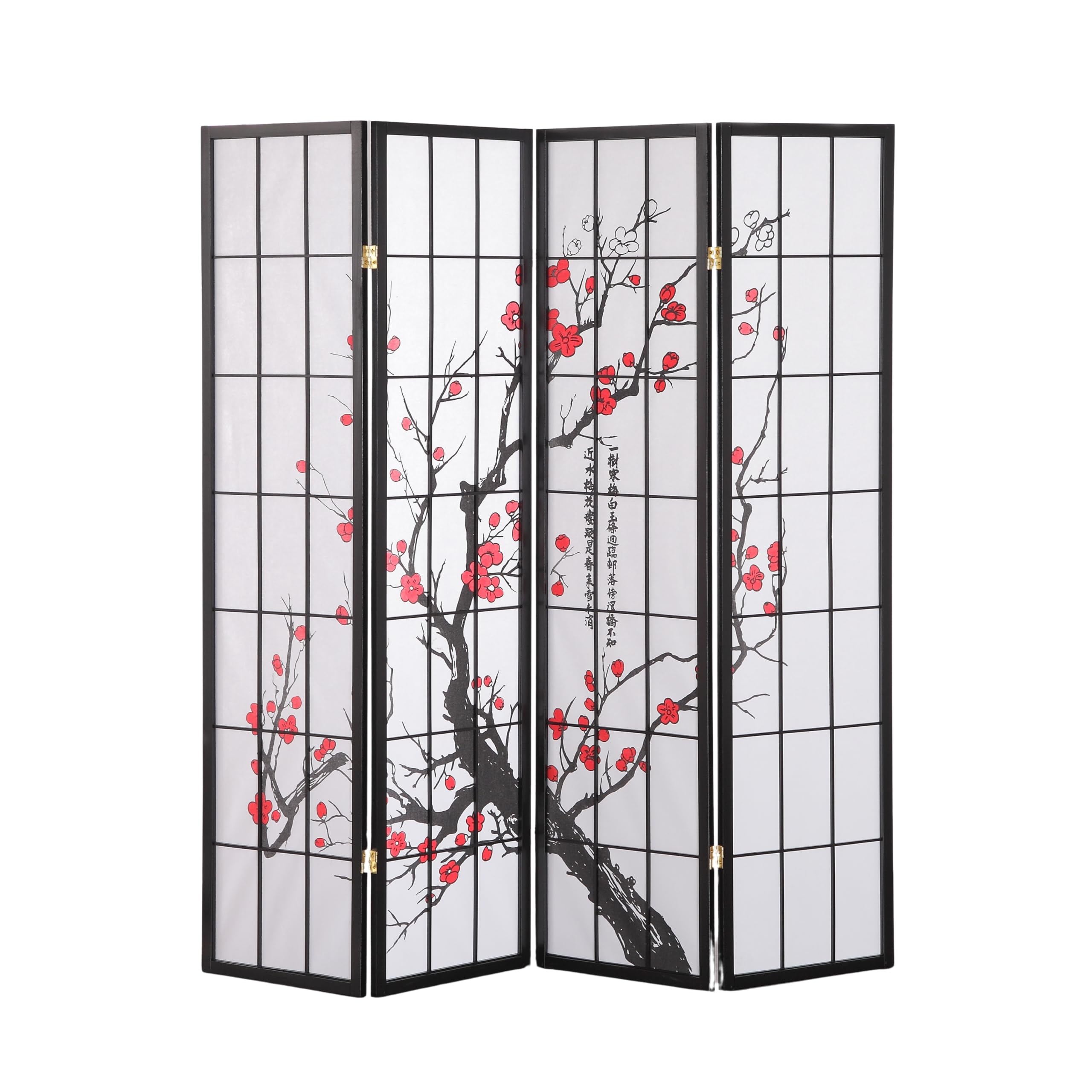
Roundhill Japanese 4-Panel Divider

Roundhill Japanese 4-Panel Divider

9.1/10 Outstanding
  • Panels: 4
  • Weight: 11 lb
  • Material: Rice paper and wood
  • Overall Size: 71"W x 71"H
Check Price on Amazon

Pros

  • 11 lb frame one person can move
  • Paper panels block the view but pass daylight
  • Ships assembled and folds flat
  • Opens to a full 71 x 71 inches

Cons

  • Rice paper is delicate around pets and heat
  • Print reads redder than the listing photos

Eleven pounds is the number that decided this one for us. A 71-inch screen that one person can pick up, walk across a room and set down without help is a screen that actually gets used, and opened out to 71 inches wide it covers a bed alcove, a desk or a doorway properly. Light weight plus real coverage is a rarer combination in this category than it looks.

The rice paper does the second half of the job. You can't see through it, so nobody is reading your screen or watching you cross the room, but it passes light, which means the corner you've screened off doesn't turn into a dark box. That's the trade we make every time in a small apartment: a little less opacity than a fabric panel, a lot more daylight.

It arrives assembled and folds flat, so deployment takes seconds and storage takes a sliver of wall. The frame is light wood rather than joinery-grade hardwood, and you can feel that when you open it out — it's a screen, not a wall, and it wants a corner or a wall at one end rather than a spot in the middle of a hallway.

What it's best at is the unglamorous middle of the category: a bed in a studio, a desk that needs to disappear at six o'clock, a doorway you don't want to look through from the kitchen. At five foot eleven in both directions it handles all three. It's also the pick if you move it constantly, because nothing on it needs tightening and there are no clips to lose.
Bottom Line: If you want one screen for everyday privacy, start here: it's tall, wide, light enough to move alone, and opaque enough to hide a bed while still letting daylight through.
#2

Best for Blocking Light

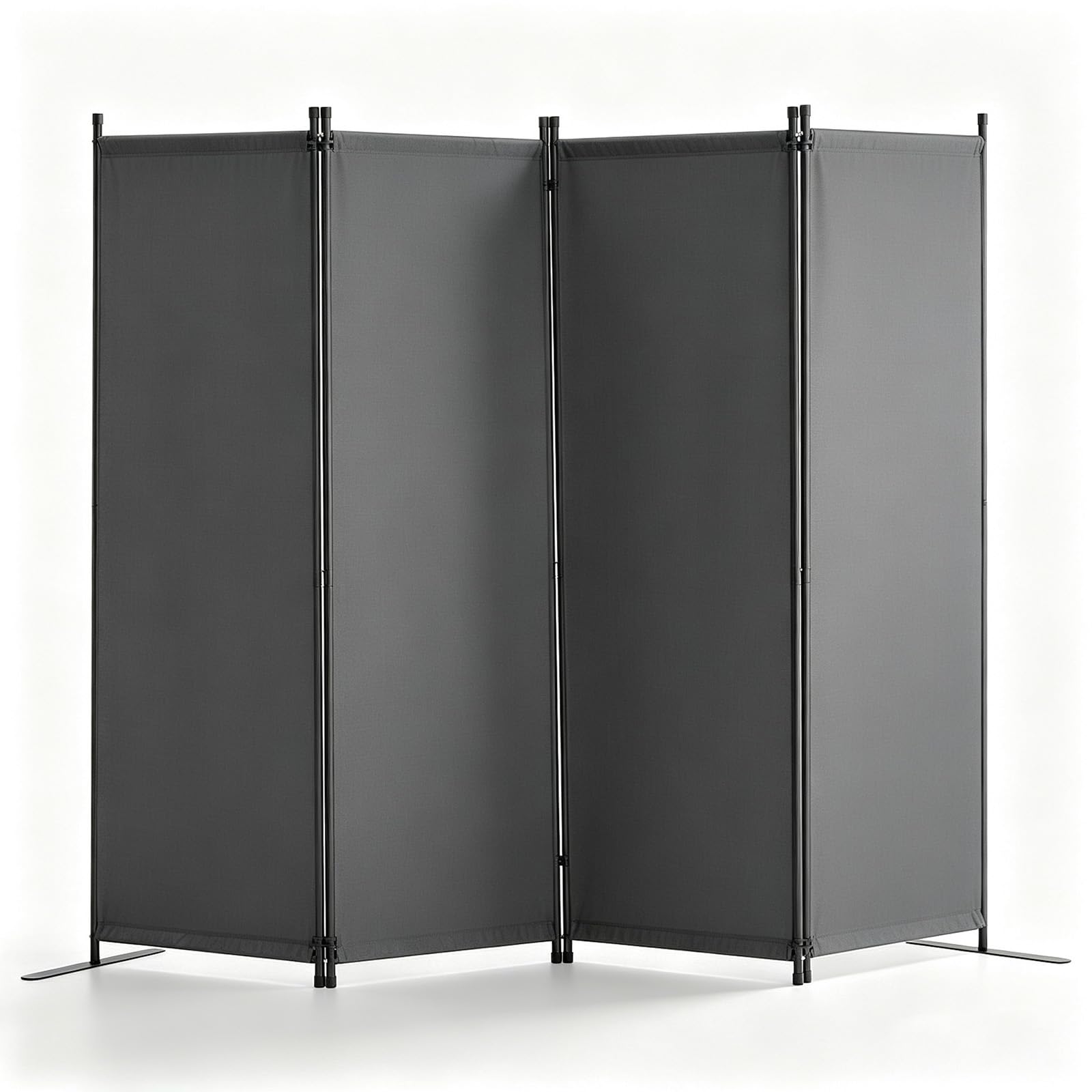
VEVOR 4-Panel Fabric Divider

VEVOR 4-Panel Fabric Divider

8.8/10 Excellent
  • Panels: 4
  • Weight: 17.4 lb
  • Material: 180 g coated polyester
  • Overall Size: 89.8"W x 67.9"H
Check Price on Amazon

Pros

  • Coated fabric blocks light and sightlines
  • 89.8-inch span covers a wide opening
  • Reconfigures from one to four panels

Cons

  • Shorter than the 71-inch screens here

Most folding screens filter light; this one stops it. The panels are 180 g polyester with a coating on them, and we stood one in front of a lit doorway to check: no glow, no silhouette, no shadow play. If what you're screening is a bright window, a lit hallway or a neighbor's security light, this is the material you want.

The coverage is the other half of it, and together they make this our pick for light problems. At 89.8 inches wide it's the second-longest screen here, wide enough to cut a long living room in half or wall off a patio door, and at 67.9 inches tall it clears a sofa back and most seated sightlines. It's also the one screen here you can rebuild from one to four panels, so it can shrink to fit a different wall after you move.

The cost is an evening of assembly. The frame arrives as carbon steel tubes and nine connector clips, the printed instructions are thin, and the fabric comes out of the box creased — iron the panels flat before you clip them on, because they hang the way they're clipped. Once it's up it's steady on its metal feet on carpet and hard floor, though at 17.4 pounds it isn't something you'll reposition daily.

Bottom Line: Buy this one when the problem is light as much as sightlines: the coated fabric panels go nearly blackout and cover ninety inches of wall.
#3

Best for Large Rooms

Sorbus 8-Panel Mesh Divider

Sorbus 8-Panel Mesh Divider

8.7/10 Excellent
  • Panels: 8
  • Weight: 22.9 lb
  • Material: Woven mesh on wood frame
  • Overall Size: 130"W x 69"H
Check Price on Amazon

Pros

  • 130-inch run from a single screen
  • Double hinges turn corners
  • Listed for indoor and outdoor use
  • Folds flat to store

Cons

  • Semi-sheer weave shows silhouettes
  • Costliest screen here, and the price buys length

One box, 130 inches of screen. If you're dividing a studio, closing off a basement corner, or putting something between the dining table and the sofa, the arithmetic sells this one: eight double-hinged panels give you a run no four-panel screen here comes close to, and the hinges fold both ways so you can turn corners and zigzag it instead of stacking it in a flat line.

We describe the panels as semi-sheer, and we mean it. The woven mesh breaks up a sightline and gives a room an edge, but a lamp or a window behind it still glows through, and from a few feet away you can make out shapes. For zoning a living area after dark that's fine; for changing clothes behind, it isn't, and we think you should hear that before it arrives rather than after.

Two practical notes. It's the heaviest screen here, so repositioning is a two-hand job and you'll want to decide where it lives rather than shove it aside with the vacuum. And it's listed for indoor and outdoor use, which none of the others are — on a covered porch or a balcony it's the obvious pick, though it still comes in for a storm.

Bottom Line: When one screen has to break up a whole open floor, this eight-panel run covers close to eleven feet — just know the mesh weave is semi-sheer, not opaque.
#4

Best for Renters

JOSTYLE Rattan 4-Panel Divider

JOSTYLE Rattan 4-Panel Divider

8.7/10 Excellent
  • Panels: 4
  • Weight: 13.2 lb
  • Assembly: None required
  • Overall Size: 79.9"W x 70.9"H
Check Price on Amazon

Pros

  • Unfolds with no assembly or tools
  • 79.9-inch span at 13.2 pounds
  • Folds flat for storage and moving day

Cons

  • Open weave shows silhouettes up close
  • Thin frame and hinges feel brittle

Nothing to install and nothing to damage is a feature in itself. This one unfolds straight out of the box, stands on its own four panels, and folds flat again when you want the floor back — which is why it's our pick for apartments where drilling isn't an option and the layout might change next year.

The width is the surprise. At 79.9 inches across it's wider than most four-panel screens here, and at 13.2 pounds you can carry it by the frame with one hand. The woven panels do what woven panels do: they break the view while letting air and daylight move through, so a small room doesn't end up with a dark slab in the middle of it.

Close up, the weave is more open than the photos suggest. Someone standing six feet away gets a silhouette, and a lamp behind it glows through — in a living room that's a soft edge, in a bedroom it isn't privacy at all. We treat it as a beautiful way to divide a space rather than a door you can close.

Bottom Line: No tools, no wall contact, no assembly: this is the divider we hand to anyone renting, because it screens 80 inches and moves out with them.
#5

Best Budget

RHF 4-Panel Bamboo Divider

RHF 4-Panel Bamboo Divider

8.9/10 Excellent
  • Panels: 4
  • Weight: 8.9 lb
  • Assembly: None required
  • Overall Size: 63"W x 71"H
Check Price on Amazon

Pros

  • Least expensive screen in this group
  • 8.9 lb and ready to use out of the box
  • Woven pattern looks better than the price

Cons

  • Light enough to shift when bumped

The least expensive screen here still arrives assembled, still folds flat and still looks like furniture rather than a folding prop — which is why we keep recommending it for the spare room and the patio. Eight-point-nine pounds means you can carry it in one hand, and four panels open to 63 inches, enough to screen a bed or a desk.

The dark coffee finish and the woven diamond pattern do more work than the price suggests. It sits on small feet rather than flat panel edges, so the bottom doesn't collect dust, and the arched top keeps it from looking like office furniture. Sixty-three inches across four panels is enough to screen a bed or a desk, not a whole room.

Stability is where it asks for cooperation. It's light enough that a shoulder brushed past will move it, and the panels fold the wrong way if you drag rather than lift. Set it in a zigzag with one end tucked against something and it stays put; leave it as a flat line across open floor and it won't. That's an easy bargain at this price.

Bottom Line: The least expensive way to get a six-foot screen that reads as furniture, and at 8.9 pounds it's light enough to move one-handed.
#6

Best for Small Rooms

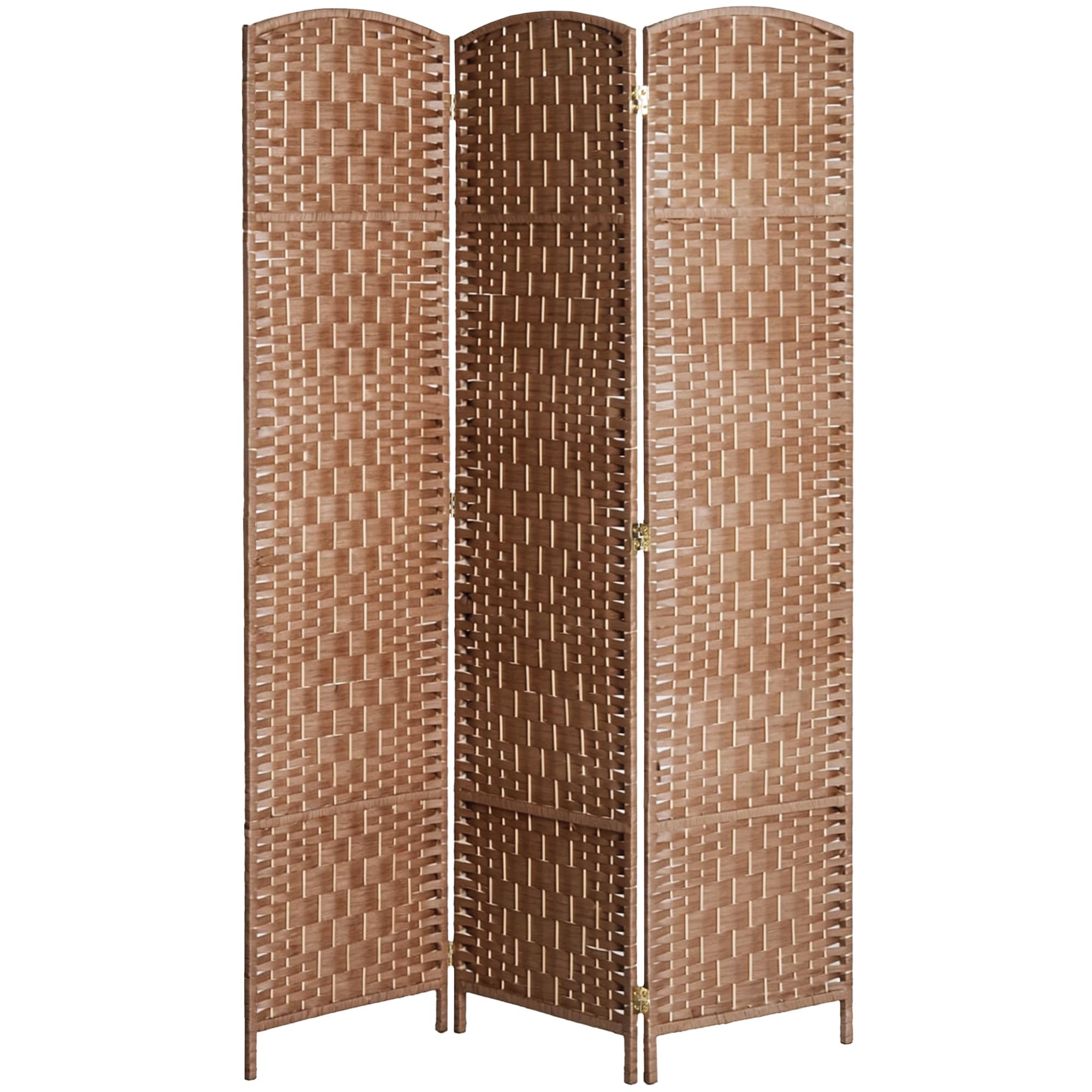
HOMCOM 3-Panel Wicker Screen

HOMCOM 3-Panel Wicker Screen

8.8/10 Excellent
  • Panels: 3
  • Weight: 8 lb
  • Folded Size: 17.7"W x 2.4"D x 70.9"H
  • Overall Size: 53.1"W x 70.9"H
Check Price on Amazon

Pros

  • Folds to 17.7 inches wide
  • 8 lb and no assembly
  • 360-degree hinges stand it without a base
  • Woven paper rope with an arched top

Cons

  • Only 53 inches of coverage
  • Leans on uneven floors

Small rooms don't need less screen, they need a screen that can disappear. This one folds down to 17.7 inches wide and 2.4 inches deep, which is the difference between a divider you keep and a divider that ends up behind the door permanently — and at 8 pounds you can carry it one-handed from room to room.

Opened out it's 53.1 inches of woven paper rope in a diamond pattern, 70.9 inches tall, with an arched top that looks like furniture rather than a folding prop. The 360-degree hinges are the practical part: fold it into a Z or a W and it stands without feet or a base, which is how it fits where a four-panel screen won't.

Coverage is the trade we accept here. Three panels is 53 inches, so it screens a desk, a bath alcove or a corner of a shared bedroom, not a whole bed. And because it stands on the shape you fold it into rather than on a base, it leans if the floor isn't level or if someone puts a hand on it. On carpet or braced against a wall it's steady; in the middle of a walkway it's something to step around.

Bottom Line: For a corner, a doorway or a small rental, this three-panel wicker screen folds to under two feet wide and stands up on its own hinges.
#7

Corner screening

FDW 4-Panel Wood Mesh Divider

FDW 4-Panel Wood Mesh Divider

8.7/10 Excellent
  • Panels: 4
  • Weight: 15.4 lb
  • Material: Hand-woven wood mesh
  • Panel Size: 18"W x 71"H
Check Price on Amazon

Pros

  • Six-foot panels at a low price
  • Dark mesh blocks the view and most light
  • Arrives assembled at 15.4 pounds

Cons

  • Tips when knocked in a walkway

Six feet of black woven panel is a lot of screening for the money, and the hand-woven mesh reads as dark furniture from across a room rather than as a folding screen. Four 18-inch panels open to roughly six feet of coverage, it arrives assembled, and at 15.4 pounds it's heavy enough not to skate across a wood floor.

Corners and backdrops are where it earns its place: behind a desk for video calls, in front of a water heater, across the end of a sun room. The weave blocks the view and most of the light, and the matte black frame disappears against dark furniture.

What it doesn't do is stand up to traffic. The panels are light, the frame is thin, and a knock sends the whole thing over — the fix is placement rather than adjustment: open it into a zigzag, put one end against a wall, and keep it out of the path between the sofa and the kitchen.

On camera it's better than it has any right to be. The weave reads as a solid dark panel on a video call, with no lamp glow or silhouette behind you, which is a specific job a paper or fabric screen doesn't do as well. That's the reason it stays on this list.

Bottom Line: A tall, dark screen for very little money — buy it for a corner that already has a wall behind it, not for the middle of a busy room.

How We Tested Privacy Screen Room Dividers

We started by researching the privacy screen room dividers sold at major retailers and narrowed a long list by size, panel count, material, hinge style, and price. We ruled out anything with vague dimensions, flimsy-looking feet, or reviews that repeatedly mentioned tipping, then bought 10 to test for eight months.

Those 10 screens lived in a home office corner, a guest room, and an open living area. I assembled each one solo and timed setup, then moved it between rooms and up a flight of stairs to judge weight and whether it was manageable without a second person. During the day and again at night with a lamp on, I stood behind each screen and checked whether I could see shadows, read a laptop screen through the panels, or spot gaps at the hinges. I also walked past each one repeatedly, bumped it lightly with a hip, and opened and folded it to see whether it wobbled, crept across the floor, or loosened at the joints.

For appearance and quality, I lived with each screen for weeks at a time, noting whether the finish looked intentional from the couch, whether edges and hardware felt sharp or loose, and whether feet scratched hard floors. I evaluated value by comparing how each one felt to use against what its price bracket promised, not just materials, but whether it stayed put, folded cleanly, and still looked presentable after being moved. The screens that scored best were the ones that made privacy feel ordinary: no wobble, no peep gaps, no fuss, and a look I didn't want to hide.

How to Choose Privacy Screen Room Dividers

Opacity: sightlines and light are different problems

Privacy in this category means two things — stopping a sightline and stopping light — and the panel material decides which one you get. Woven bamboo, paper rope and rice paper break up a view but pass daylight, which keeps a small room from feeling like it has a wall dropped into the middle of it. Coated polyester goes the other way and darkens whatever sits behind it.

Decide which problem you actually have before you shop. A woven screen is right for zoning a living area and wrong for a changing corner or a window you're trying to dim. When a listing describes a panel as semi-sheer, take it literally.

Width is the variable, height barely moves

Panel widths run from roughly 16 to 20 inches, so a four-panel screen spans somewhere between five and seven feet. Height is the part shoppers skip, and here it hardly varies: every screen we recommend lands between 67.9 and 71 inches tall, which is enough to block a standing sightline. That makes width the real decision.

Measure the gap you want covered and add a panel's worth of margin, because the screen needs room to stand in a zigzag rather than a straight line. An eight-panel screen covers close to eleven feet; a three-panel one covers about four and a half.

Stability comes from placement, not the spec sheet

The failure mode for a folding screen is movement. Freestanding panels are light by design, and a straight line of them across open floor has nothing bracing either end. Fold the screen into a zigzag with one end against a wall and a light screen becomes dependable; leave it straight and it becomes something to walk around.

If open floor in a walkway is your only option, buy width and weight — the Sorbus or the VEVOR — and accept that repositioning takes two hands.

Weight and the folded footprint

A screen you can't move is furniture, and one that won't fold is a wall. Weight spans more than ten pounds across this group, from the 8.9-pound RHF to a Sorbus that takes two hands, and that gap is the difference between carrying a screen one-handed and planning a route around the sofa.

Check the folded footprint as carefully as the open width: a three-panel screen can fold under two feet and live behind a door, while an eight-panel one folds into a stack that needs a corner of its own. If you rent, or you rearrange more often than you move house, weight matters more than finish.

Assembly, materials and how long it lasts

All but one of these arrive ready to use; the VEVOR needs an evening with clips and a second pair of hands. After that, material decides how long the screen lasts.

Rice paper is the most fragile and the hardest to patch. Woven bamboo and paper rope take knocks but can split where the hinges are drilled. Coated polyester is the most forgiving of the three. If the screen will live in a busy room with pets or kids, choose fabric and accept that you're giving up daylight.

Frequently Asked Questions

Final Verdict

The Roundhill Japanese screen is the one we point most people to, and the reason is simple: at 11 pounds it's light enough that you will actually move it, and at 71 inches square it screens a real piece of a room without turning that corner dark.

If what you're blocking is light rather than a sightline, the VEVOR's coated panels do that better. And if the budget is the binding constraint, the RHF gets you a six-foot screen for the least money — as long as you set it in a zigzag rather than a straight line.