Dining Room

Best Breakfast Nook Benches of 2026

A good breakfast nook starts with somebody refusing to leave the table. Coffee going cold, a kid doing homework where the cereal goes — that corner only works if the seating does. A bench is what makes it work, turning dead wall space under a window into the seat everyone wants. It's also the piece most likely to disappoint: an inch too deep and it crowds the table, an inch too tall and your knees hit the apron, and a wobbly frame announces itself every time someone shifts.

Over the past eight months, my team and I have built, scooted, and eaten at 11 of these benches, and the pattern held. The keepers are heavier than they look, honest about their materials, and built around storage you'd actually use — a lid that stays up, a drawer that slides with one finger. Assembly and instructions split the field faster than looks ever did. Value, in this category, is a bench that survives being climbed on by a kid holding a plate. The picks below all earned their corner.

#1

Best Overall

Bobve L-Shape Storage Bench

Bobve L-Shape Storage Bench

8.3/10 Very Good
  • Cushion: Included with washable cover
  • Dimensions: 62.6"D x 62.6"W x 18.3"H
  • Weight Limit: 350 lb
  • Seating Capacity: 4
Check Price on Amazon

Pros

  • Cushions included, with washable covers
  • Deep hidden storage under each seat
  • 18.3-inch seat height suits standard tables
  • Self-assembly is realistic with numbered parts

Cons

  • 350-pound rating covers two to three adults
  • Screw holes can misalign during assembly

Most of the corner benches on this page arrive without cushions, which turns a seating project into a two-part shopping trip. The Bobve skips that step: the seat pad is in the box, its cover zips off for washing, and the foam is soft enough to sit through a second cup of coffee without shifting. That inclusion is the detail we kept coming back to, because it's the difference between a bench you can use the day it's built and one that waits on a delivery you forgot to order.

The footprint is the other half of the argument. At 62.6 inches along each wall it fills a genuine corner rather than a token one, and the 18.3-inch seat height tucks under a standard dining table without knees meeting the apron. Open the seat tops and you find storage boxes deep enough for blankets, board games, and the drift of kid clutter that collects around a kitchen table. Storage that swallows a board game is what makes a bench earn its corner instead of just occupying it.

Two limits are worth knowing before you order. The bench is rated for 350 pounds, which the spec sheet frames as two to three adults, so four grown-ups at Sunday brunch is optimistic even though four can physically fit. And the build, while straightforward, can throw a misaligned screw hole at you, so keep a drill handy and don't force anything. Figure an hour to ninety minutes with two people, and a finished nook by lunch.

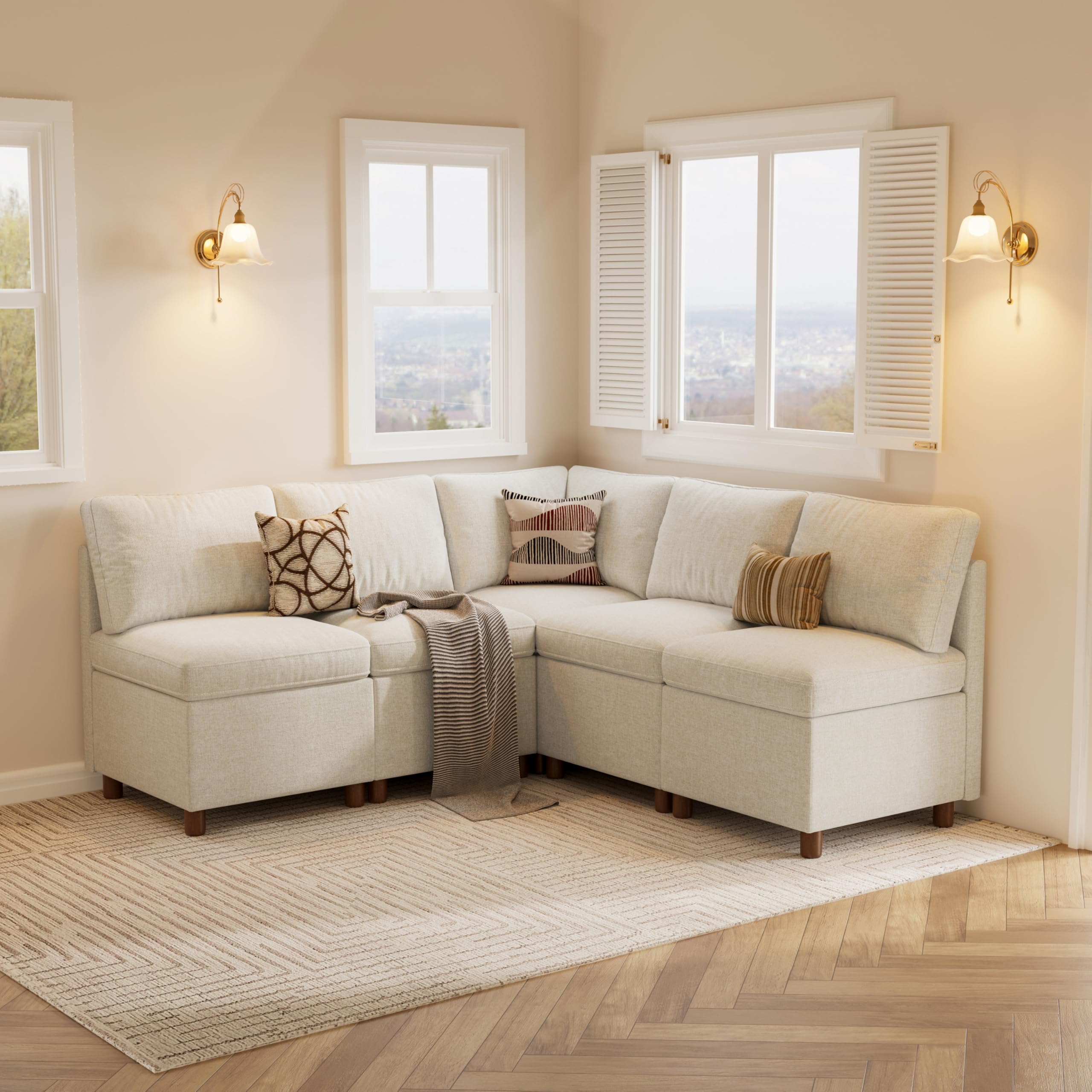
Bottom Line: Our default pick: cushions included, a 350-pound rating that outlasts the budget benches, and storage that genuinely earns the corner.
#2

Best Budget

TAMUNE L-Shaped Nook Bench

TAMUNE L-Shaped Nook Bench

8.7/10 Excellent
  • Storage: Flip-top compartment under each seat
  • Dimensions: 63"D x 63"W x 17.7"H
  • Weight Limit: 150 lb
  • Seating Capacity: 4
Check Price on Amazon

Pros

  • Cheapest corner bench in this group
  • Numbered parts and a clear manual
  • Storage swallows a small appliance
  • Oak-and-white finish looks above its bracket

Cons

  • 150-pound rating limits it to light use
  • Cushions not included

One number decides who this bench is for: 150 pounds. That's the maximum weight recommendation on a 63-inch L that otherwise looks and behaves like benches further up this page. The spec sheet lists four seats, and four people can physically sit on it, but the rating says something different, so we treat the oak-and-white TAMUNE as seating for kids, for a fast weekday breakfast, and for a corner where nobody settles in for a second coffee.

Within that brief, we came away impressed. The engineered-wood panels are cleanly finished, the oak-and-white two-tone looks deliberate rather than budget, and the flip-top lids hide real volume: an Instant Pot fits, which is a better test than any capacity figure. Assembly surprised us most. Parts are numbered, the manual matches them, and the build is light enough that one person of average strength can finish it in an afternoon, which is rare for a corner unit this size.

The backless design is the other trade. It keeps sightlines open under a window and disappears under the table line, but it's perching rather than lounging, fine for cereal and homework and less so for a long holiday breakfast. If the bench spends more time as a shoe perch by the door, none of that matters much: the flat seat and the low rating both suit a thirty-second sit.

Bottom Line: We think it's the cheapest credible route to a corner nook, provided everyone sitting on it is on the lighter side.
#3

Best Upholstered

SITJOY 5-Seat Corner Bench

SITJOY 5-Seat Corner Bench

9.2/10 Outstanding
  • Covers: Zippered, machine washable
  • Seating: 5 seats, 1 corner
  • Dimensions: 72.2" x 72.2" x 33.2"
  • Weight Limit: 350 pounds per seat
Check Price on Amazon

Pros

  • Cushions and covers unzip for washing
  • 350-pound rating on every seat
  • Backed seating for long meals
  • Modular sections can be reconfigured

Cons

  • Needs a 72-inch corner on both walls
  • Heaviest bench here at 226 pounds

Breakfast is the meal that ends up on the seat, and the SITJOY is built for that. The seat and pillow covers are zippered and machine washable, the upholstery is polyester carrying OEKO-TEX Standard 100 certification, and nothing about the fabric feels precious, which is the point when a four-year-old with a yogurt spoon is climbing up beside you.

At 72.2 inches a side it wants a bigger corner than anything else here. This is a banquette rather than a bench under a window: 33.2 inches tall with a back to lean into, five seats including the corner, and modular sections that come apart if you move somewhere the L no longer fits. The frame and legs are solid wood, each seat is rated to 350 pounds, and there are protective pads underneath so a hardwood floor doesn't pay for the arrangement.

Comfort is the entire argument for spending here, and it's the one thing the backless picks can't answer. We sat longest on this one. A padded back turns a fifteen-minute breakfast into somewhere you'll read the paper, and the storage under each seat is deep enough for the tablecloths you use twice a year. Whether the premium is worth it depends on how often the nook is occupied; a household that eats there daily will get it back in use.

If the corner you have is 62 inches, stop here: the SITJOY won't fit and the 62-inch benches will. It's also the heaviest thing in this group at 226 pounds, so plan on two people for delivery and assembly and a clear floor to work on.

Bottom Line: We came away wanting to sit here longest: a padded back, washable covers, and 350 pounds of rating per seat.
#4

Best Farmhouse Look

Linon Harris Corner Nook

Linon Harris Corner Nook

8.4/10 Very Good
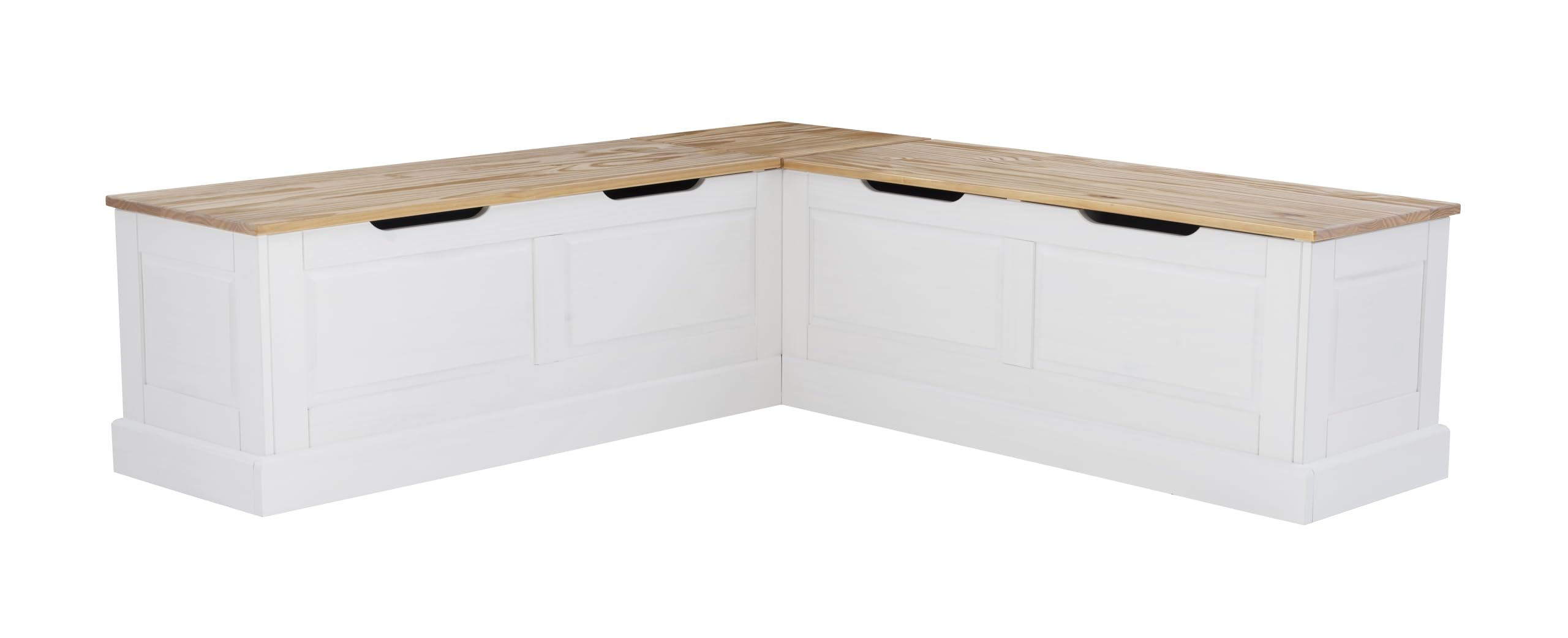
  • Finish: Natural pine seat, white base
  • Storage: Hidden storage under both seats
  • Corner Span: 62.2 inches per side
  • Seat Dimensions: 62.2" W x 16.5" D x 18.2" H
Check Price on Amazon

Pros

  • Convincing two-tone farmhouse finish
  • Hidden storage under both seats
  • Fits the same 62-inch corners as our top pick
  • Solid pine seat surface

Cons

  • Nook only, table and cushions excluded
  • Assembly is a full-day, two-person job

Nothing about the Harris is hard to understand, and everything about it takes time. It arrives as panels, screws, and a picture-only instruction sheet, and the pilot holes don't always land where the diagram promises: some are missing, some sit slightly off, and the answer is a drill and a calm afternoon rather than a return. Budget two people and most of a day if you're fitting it around real life.

What justifies the effort is how it looks once it's standing. The natural pine seat over a white painted base is the most convincing farmhouse finish in this group. It reads like something built into the room rather than dropped into it, which is exactly what a nook should do. Two-tone is forgiving, too: scuffs on the white base wipe clean, and pine picks up a patina instead of looking damaged.

Storage runs beneath both seats, which is where the games, the napkins, and the off-season tablecloth live. At 62.2 inches a side it fits the same corners as our top pick, and the scope is spelled out plainly: nook only, no table, no cushions. That's the honest trade. You're paying for a look and a footprint, and supplying the labor and the padding yourself.

Bottom Line: Our favorite farmhouse look here, and a build that will eat an afternoon.
#5

Furnishing a bare corner

Linon Chelsea Kitchen Nook

Linon Chelsea Kitchen Nook

7.7/10 Good
  • Footprint: 67.25"D x 51.49"W x 33.75"H
  • Set Includes: Table, 2-seat bench, corner bench
  • Weight Limit: 550 lb
  • Seating Capacity: 5
Check Price on Amazon

Pros

  • Complete set: table and two benches
  • Seats five in a compact footprint
  • Solid pine tabletop and seats
  • Corner direction chosen at assembly

Cons

  • Bench is not sold without the table
  • Walnut is the only finish offered

The Chelsea isn't really a bench, and that's the first thing to understand about it. It ships as a complete nook, a table, a two-seater bench, and a three-part L-shaped corner bench that together seat five, so the shopping question changes from which bench to whether you want to furnish the whole corner at once. If you already own a table you like, you're paying for furniture you don't need.

For an empty corner it's a sensible package. The tabletop and seats are solid pine, the frames are MDF, and the walnut finish is warm and traditional next to the pale oak and white that turns up everywhere else on this page. The corner section can be built with the long run on either side, so you can plan around a door swing or a radiator rather than working the room around the bench.

Size is the catch. The published footprint is 67.25 by 51.49 inches, which is compact for five seats but entirely fixed, and the corner unit decides where the table goes. The walnut also commits you to a mood: handsome in a cottage or a Craftsman kitchen, faintly formal in a bright modern one. We see it as the set for someone starting a nook from nothing.

Bottom Line: We rate it as the complete-set option: table, two-seater, and corner bench in one order.

How We Tested Breakfast Nook Benches in Real Kitchens

We started with roughly 60 benches from furniture retailers, big-box stores, and a handful of small workshops, then filtered hard on the numbers that decide whether a bench works in a real nook: seat height near 18 inches, depth shallow enough to slide under a standard 30-inch table, and a footprint that leaves room to walk past. Benches whose storage turned out to be a six-inch cavity got cut, as did anything whose shipping fees pushed it into the next price bracket. That left 11, which we ordered and assembled ourselves.

Every bench arrived flat-packed, and I built each one alone, timing myself and reading the instructions cold before opening the hardware bag. I counted the steps, noted where a diagram skipped something or the bolts went unlabeled, and flagged the points where the job really wanted two people. Then came fit: I set each bench against a wall, checked how it sat against baseboard and window trim, and slid it under a table to see whether knees cleared the apron.

Sturdiness got tested the way families test it — sitting on the front edge, leaning back, letting a kid climb up with a plate. We loaded the storage with board games, blankets, and off-season shoes, then opened and closed each lid or drawer dozens of times to see whether the hinges held or slammed. We looked at what the frame was actually made of, solid wood or veneer over MDF, and whether joints were glued and screwed or just stapled. After eight months of daily breakfasts and the occasional dinner party, we compared how each finish had held up against what it cost.

How to Choose Breakfast Nook Benches

Measure the corner, not the bench

An L-shape is defined by two numbers: how far it runs along each wall and how high the seat sits. The benches here run 62 to 72 inches a side, so measure both wall runs at baseboard height. Trim and skirting quietly steal an inch, and a bench wedged against them will not sit flush. Seat height is the second number: 17.7 to 18.3 inches clears most dining tables, while the taller, backed SITJOY expects banquette-height seating. Check the table apron and the legroom beneath it before you order.

Read the load rating, not the seat count

Seat counts are marketing; load ratings are engineering. The TAMUNE advertises four seats and a 150-pound maximum, while the SITJOY rates each seat to 350 pounds and the Bobve rates the whole bench at 350, which its spec sheet describes as two to three adults. Add up the people who actually sit at once, not the number you'd like to host, and compare that with the rating. If the bench mostly holds shoes and school bags, a low rating costs you nothing.

Storage where the lid is also the seat

Flip-lid storage is the reason a nook bench beats a pair of chairs, but think about what you're lifting: on most of these, the pad sits on the lid you open. Deep compartments earn their space with blankets, games, and small appliances; shallow ones hold napkins and mail and not much else. Look at how the lid opens and whether the cushion has to come off first, because a bench you have to unmake to reach the napkins stops being storage after a month.

Backless or backed

Backless nooks keep a small kitchen feeling open: nothing blocks the window, and the bench vanishes under the table line. They're also a perch rather than a seat, which is fine for cereal and homework and less fine for a two-hour holiday breakfast. A backed banquette such as the SITJOY gives you somewhere to lean, but it adds height, visual weight, and usually floor space. Decide how long people actually sit, then buy for the longer meal.

Budget for cushions and an afternoon

Two costs never make it into the bench price. Cushions aren't universal: the Bobve includes them, the Harris explicitly doesn't, and the TAMUNE leaves you to supply your own, so price out pads that fit the seat depth rather than the first ones you find. Assembly is the other. Expect an hour for a simple engineered-wood L and a full day for a larger unit, and read the instructions before turning screws, because picture-only sheets and misaligned pilot holes turn a two-hour build into four.

Frequently Asked Questions

Final Verdict

If you want one name, it's the Bobve. Cushions arrive with it, the load rating covers two or three adults honestly, and the storage is deep enough to change how the corner works rather than just filling it.

The alternatives earn their places on specifics. The TAMUNE is the right call when the budget is the binding constraint and the sitters are kids or school bags. The SITJOY is worth the premium when the nook is where the household settles in for an hour. The two Linons cover the rest: the Harris for a farmhouse look you're willing to build, the Chelsea when the corner needs a table too.