Kids & Nursery

Best Kids Desks of 2026

A kids desk has one job that sounds simple and isn’t: survive a child. It needs to hold a wobbly tower of books, take a marker cap to the surface, and leave enough floor space for everything else. Most desks are either flimsy flat-pack puzzles or beautiful pieces you’re afraid to let a kid near. What you want is a workspace that fits their body now, wipes clean after glue and marker mishaps, and doesn’t make the room look like a classroom.

I’ve spent six months living with 12 kids desks—assembling solo, measuring footprints in small bedrooms, and watching my kids do homework, draw, and snack at them. The differences come down to build quality, how much assembly is required, and whether the desk still looks good after daily use. A few had no sensible place for markers and supplies, which you notice fast when a 7-year-old is hunting for a green cap. We weighed that against price, because a kids desk is temporary furniture, not an heirloom. The picks below held up and got used without a fight.

#1

Best Overall

Guidecraft Kids Media Desk

Guidecraft Kids Media Desk

8.9/10 Excellent
  • Storage: 5 cubbies plus corkboard
  • Age Range: 5–12 years
  • Seat Height: 15.5 in
  • Desktop Height: 26 in
Check Price on Amazon

Pros

  • Correct school-age desktop and seat height
  • Five cubbies, corkboard, and cord cutouts
  • 44 by 24 inch work surface
  • Solid wood frame with wipe-clean veneer

Cons

  • Premium price for a kids desk
  • 75-pound set; assembly is a project

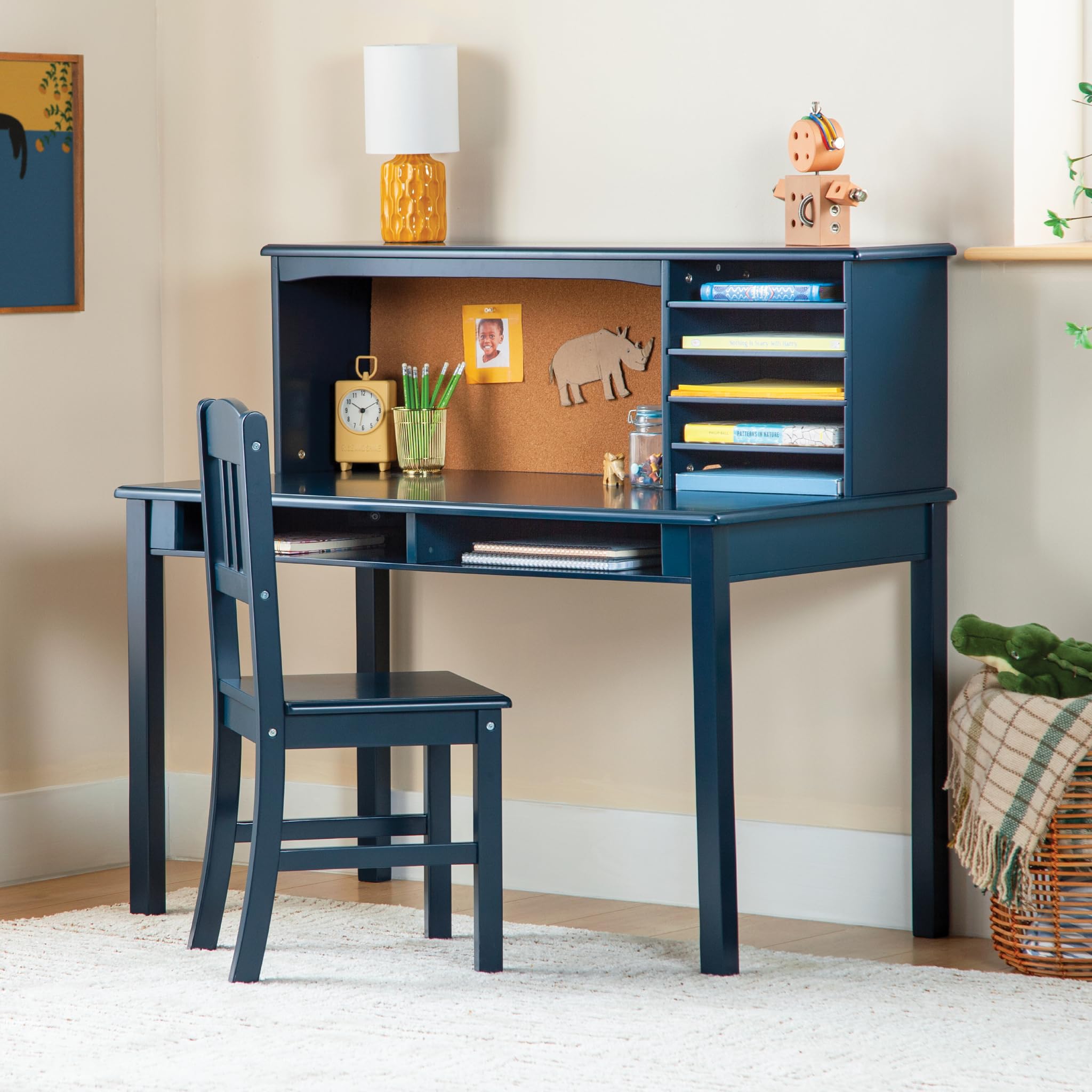
The first thing we check on a kids desk is whether a child can sit at it with feet flat and elbows at a comfortable angle. The Guidecraft gets that right: a 26-inch desktop and a 15.5-inch seat put it in the right zone for elementary and middle school kids, and the 5-to-12 age range matches the proportions. At 44 inches wide and 24 inches deep, there is room for a worksheet, a laptop, and a pencil cup without turning the top into a catch-all. We think this is the strongest homework choice here.

The hutch is what makes it feel like a real study station rather than a kids table with a chair. Five cubbies keep books and supplies off the work surface, the corkboard gives school papers a place to live, and the cord cutouts let a tablet or lamp cable disappear behind the desk instead of draping across the front. That last detail is the one we did not expect to care about, and it is the sort of thing that keeps a small desk usable as the clutter accumulates.

Build quality is the main trade-off. The solid and engineered wood frame feels substantial, and the lacquer veneer wipes clean, but the set weighs 75 pounds and arrives in pieces; plan on a real assembly session and a second pair of hands for the lift. The chair is the part to inspect on arrival, because cracked or split joints are the weak point. We still recommend it because it is the only desk here sized to carry a child through elementary school, but the premium is real.

Bottom Line: The Guidecraft is our pick for a 5- to 12-year-old who needs a real homework desk, because its 26-inch top and hutch storage fit that job better than the toddler desks here.
#2

Best for Toddlers

Delta Minnie Mouse Chair Desk

Delta Minnie Mouse Chair Desk

9.4/10 Outstanding
  • Storage: Pull-out bin and cup holder
  • Weight Limit: 50 lb
  • Recommended Ages: 3+
  • Assembled Dimensions: 20.47 x 22.83 x 23.23 in
Check Price on Amazon

Pros

  • Pull-out bin hides toys and art supplies
  • Cup holder keeps markers or snacks in reach
  • Low 23.23-inch height for toddler access

Cons

  • Outgrown by early elementary school
  • Frame can loosen with hard use

Under the seat of this Minnie Mouse chair desk is a pull-out storage bin, and that bin is the difference between a character chair and a useful toddler desk. Crayons, board books, and small toys disappear into it, while the built-in cup holder gives markers or a snack cup a dedicated spot. At 23.23 inches high, the desk sits low to the ground, so a 3- or 4-year-old can climb in and out without help.

We recommend it for the toddler-to-preschool window, not as a first homework desk. The 50-pound weight limit and 3-plus age recommendation tell you what it is built for, and the 20.47 by 22.83-inch footprint fits a bedroom corner or the side of a playroom. In our testing, the pull-out bin was the feature we kept coming back to, because it makes cleanup part of sitting down rather than a separate chore. The scratch-resistant finish wipes with a dry cloth, which matters when the art supplies come out.

The Minnie graphics are the point, and they are bright and vivid. If your child is not a Minnie fan, this desk will not earn its space; the same shape without the character is not the draw. For a Minnie-loving 3- to 5-year-old, it is an easy, cheerful place for snacks, coloring, and pretend school. Just do not expect it to replace a school-age desk when kindergarten homework starts.

Bottom Line: For a 3- to 5-year-old, we like this Minnie chair desk for its pull-out bin and cup holder, which make toddler cleanup easier.
#3

Best for Little Artists

Spider-Man Draw and Play Desk

Spider-Man Draw and Play Desk

9.2/10 Outstanding
  • Storage: Side compartment and marker holders
  • Includes: 10 markers and 4 coloring pages
  • Recommended Ages: 2+
  • Assembled Dimensions: 23.23 D x 27.9 W x 18.85 H in
Check Price on Amazon

Pros

  • Includes 10 markers and four coloring pages
  • Marker holders and side cubby organize supplies
  • Wipe-clean plastic surface

Cons

  • Too low for school-age homework

The Spider-Man Draw and Play Desk arrives with 10 markers and four coloring pages, and the marker holders are built into the desk. That tells you what this piece is for: drawing, coloring, and craft projects, not spelling tests. At 18.85 inches high, it is toddler-scale, and the 27.9-inch width gives a small child a dedicated art surface without taking over a room.

We like the side compartment more than we expected. It swallows coloring books and loose pages, and the marker holders keep the pens upright instead of rolling onto the floor. The plastic body wipes clean, which is the right material for a desk that will see marker, glue, and snack crumbs. Assembly is straightforward, and the compact footprint means it can move from the playroom to the kitchen when the project moves with it.

The limitation is the one the height already suggests: this is not a school-age homework desk. A 7- or 8-year-old will be hunched over it, and the built-in bench seat is better for coloring than for long study sessions. We recommend it for a 2- to 5-year-old who needs a place to color, and for parents who want the supplies to live with the desk. If you need one surface that will carry a child through elementary school, the Guidecraft is the better long-term buy.

Bottom Line: We think the Spider-Man desk is the right art station for a toddler: markers and coloring pages live in its holders, and the plastic wipes clean.

How We Tested Kids Desks

We started by pulling together desks that fit a range of ages and room sizes, then filtered by height adjustability, footprint, materials, assembly requirements, and price. That left 12 desks, which we used for six months in kids’ bedrooms and a shared family room—not a showroom. Each one had to earn its spot through homework sessions, weekend art projects, snack breaks, and the usual after-school clutter.

Assembly came first. I built each desk solo at the kitchen table, using only the tools in the box, and timed how long it took; I also noted the steps that needed a second pair of hands or a missing drill bit. I measured the footprint, knee clearance, and height range, then slid each desk into a real room to see whether it blocked a closet or left room for a chair. During use, I watched for wobble when a kid leaned on the edge, sharp corners, and whether the height actually matched a growing child.

Durability got the messy test: markers, glue sticks, snack crumbs, and a few accidental kicks. I checked whether marker came off the surface with a damp cloth, whether edges chipped, and whether the finish showed fingerprints. I also counted practical storage—if there was no place for markers and supplies, I noted how quickly they ended up on the floor. At the end, I compared what each desk cost against how solid it felt, how good it looked in a room, and whether my kids still chose to sit at it.

How to Choose Kids Desks

Start With Seated Height, Not the Age Sticker

The Guidecraft's 26-inch desktop and 15.5-inch seat are sized for ages 5 to 12; the Minnie and Spider-Man desks sit at 23.23 and 18.85 inches, which is toddler territory. A child should sit with feet supported and elbows close to the work surface. If the desktop hits mid-chest or the feet dangle, the desk is too tall, even when the age label says otherwise. Measure the child in the chair you plan to use, then compare the desktop to their seated elbow height. A low desk that fits now beats an adult-height surface with a booster.

Match Storage to the Daily Mess

Art supplies, school papers, and small toys create different storage problems. A pull-out bin under the seat hides clutter fast, which is why it works for toddlers; open cubbies and a corkboard keep homework visible and easier to put away, which suits school-age kids. Marker holders are worth having if coloring is the main activity, because pens stay upright instead of rolling onto the floor. We prefer storage that a child can reach without climbing. If the desk has a hutch, check that it does not crowd the work surface or block the view of the papers underneath.

Check the Frame and the Assembly Load

Sturdy kids furniture usually means more weight and more assembly. The Guidecraft set is 75 pounds and arrives in pieces, so plan a second pair of hands and a clear floor. Painted and laminated surfaces wipe clean but show scratches; a lacquer veneer or a plastic top is easier to live with than a thin printed finish. For a toddler, a light plastic desk is fine if it sits flat and wipes clean. For school-age homework, prioritize a frame that does not wobble and a chair whose joints you can inspect after assembly.

Measure the Footprint and the Growth Window

A 44-inch-wide desk needs a wall long enough for the chair to pull out and for a child to walk past; the toddler desks are roughly 23 to 28 inches wide and fit tighter corners. Check the age range against how long you want the desk to last. A 2-plus art desk is not a kindergarten homework station, and a 5-to-12 desk covers elementary and middle school. If you are buying for a 4-year-old, a low desk now and a larger one later is often more comfortable than stretching a toddler desk with a booster.

Frequently Asked Questions

Final Verdict

The Guidecraft Kids Media Desk is our pick for most families with a school-age child. Its 26-inch desktop and 15.5-inch seat give a 5- to 12-year-old a real place to work, and the five-cubby hutch keeps papers and supplies off the top. The premium is real, and the chair joints deserve a look on arrival, but it is the only pick here that grows with elementary homework.

For a 3- to 5-year-old, the Delta Minnie Mouse Chair Desk is the compact choice with hidden storage; the Spider-Man Draw and Play Desk is the art-first option. Both are toddler desks, not long-term study stations.